Description
Research Overview
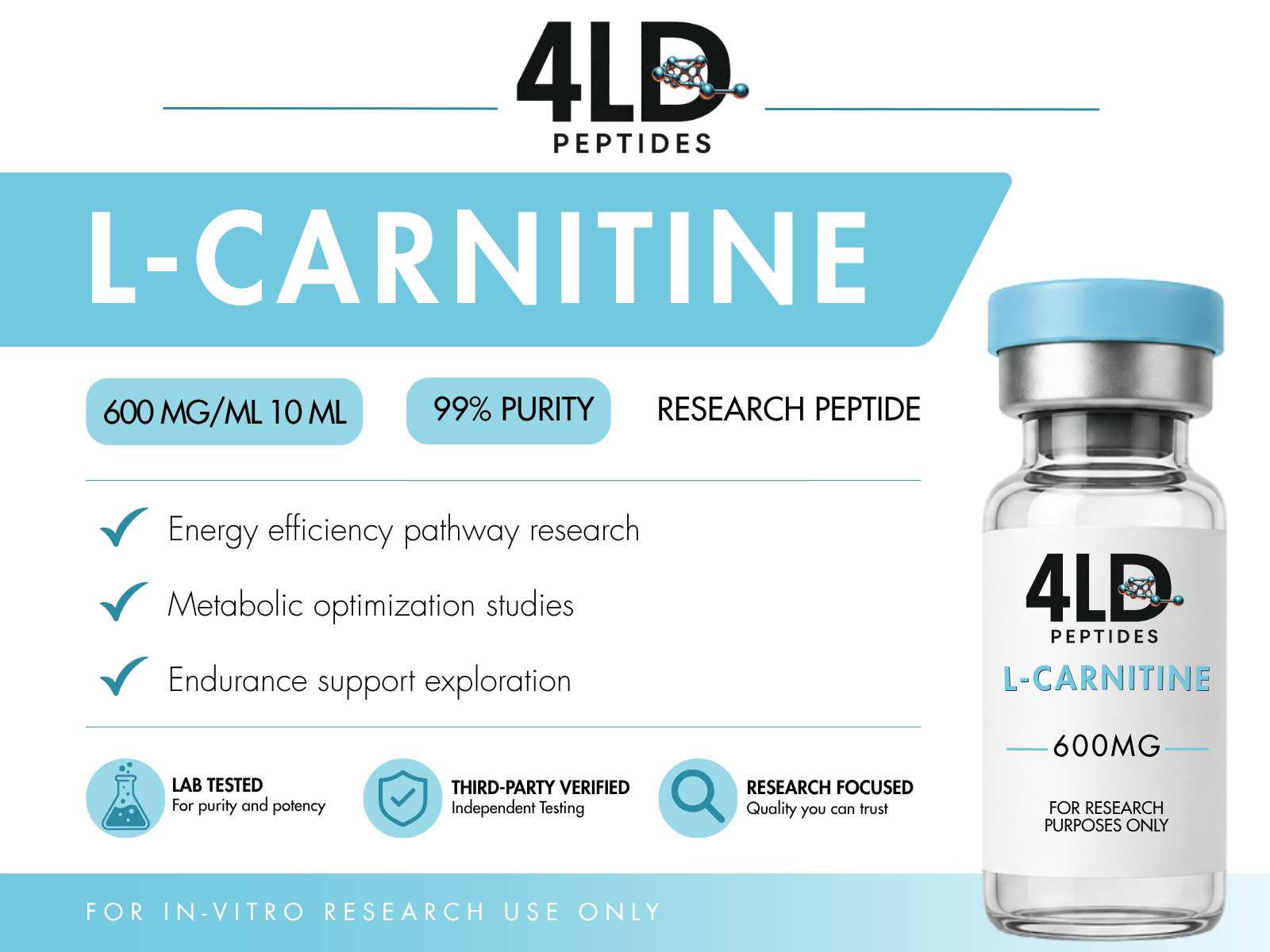
L-Carnitine is a naturally occurring compound synthesized from the amino acids lysine and methionine. It plays a central role in transporting long-chain fatty acids into the mitochondria, where they can be utilized during cellular energy production. Because of this biological function, L-Carnitine has become an important subject of investigation in mitochondrial biology, metabolism, and bioenergetics.
Researchers continue to study L-Carnitine to better understand the mechanisms that regulate cellular energy production and metabolic homeostasis. Laboratory investigations frequently examine how fatty acid transport contributes to mitochondrial function and how these pathways influence normal cellular physiology under controlled experimental conditions.
As interest in mitochondrial research continues to expand, L-Carnitine remains a valuable compound for scientists investigating energy metabolism, exercise physiology, and molecular biology.
Why Researchers Study L-Carnitine
L-Carnitine is widely investigated because it serves a fundamental role in one of the body’s primary energy-producing systems. By transporting fatty acids into the mitochondria, it provides researchers with a well-characterized model for studying cellular fuel utilization and metabolic regulation.
Its involvement in basic cellular physiology has made L-Carnitine a common research compound across numerous scientific disciplines, including mitochondrial biology, bioenergetics, exercise physiology, and metabolic science. Ongoing laboratory investigations continue to explore how these biological processes interact within healthy cellular systems.
Mechanism of Interest
Current laboratory investigations examine L-Carnitine for its involvement in biological pathways including:
- Long-chain fatty acid transport
- Mitochondrial metabolism
- Cellular energy production
- Fatty acid oxidation
- Bioenergetics
- Cellular metabolic regulation
- Mitochondrial physiology
These mechanisms continue to be actively investigated within laboratory and preclinical research settings.
Research Applications
L-Carnitine is commonly utilized in laboratory investigations involving:
- Cellular metabolism
- Mitochondrial biology
- Fatty acid transport
- Bioenergetics
- Exercise physiology
- Energy regulation
- Molecular biology
- Metabolic physiology
These applications are intended exclusively for laboratory and scientific research.
Product Specifications
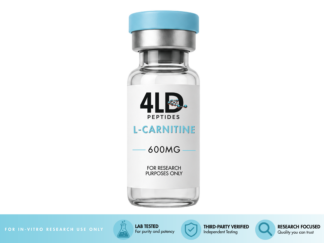
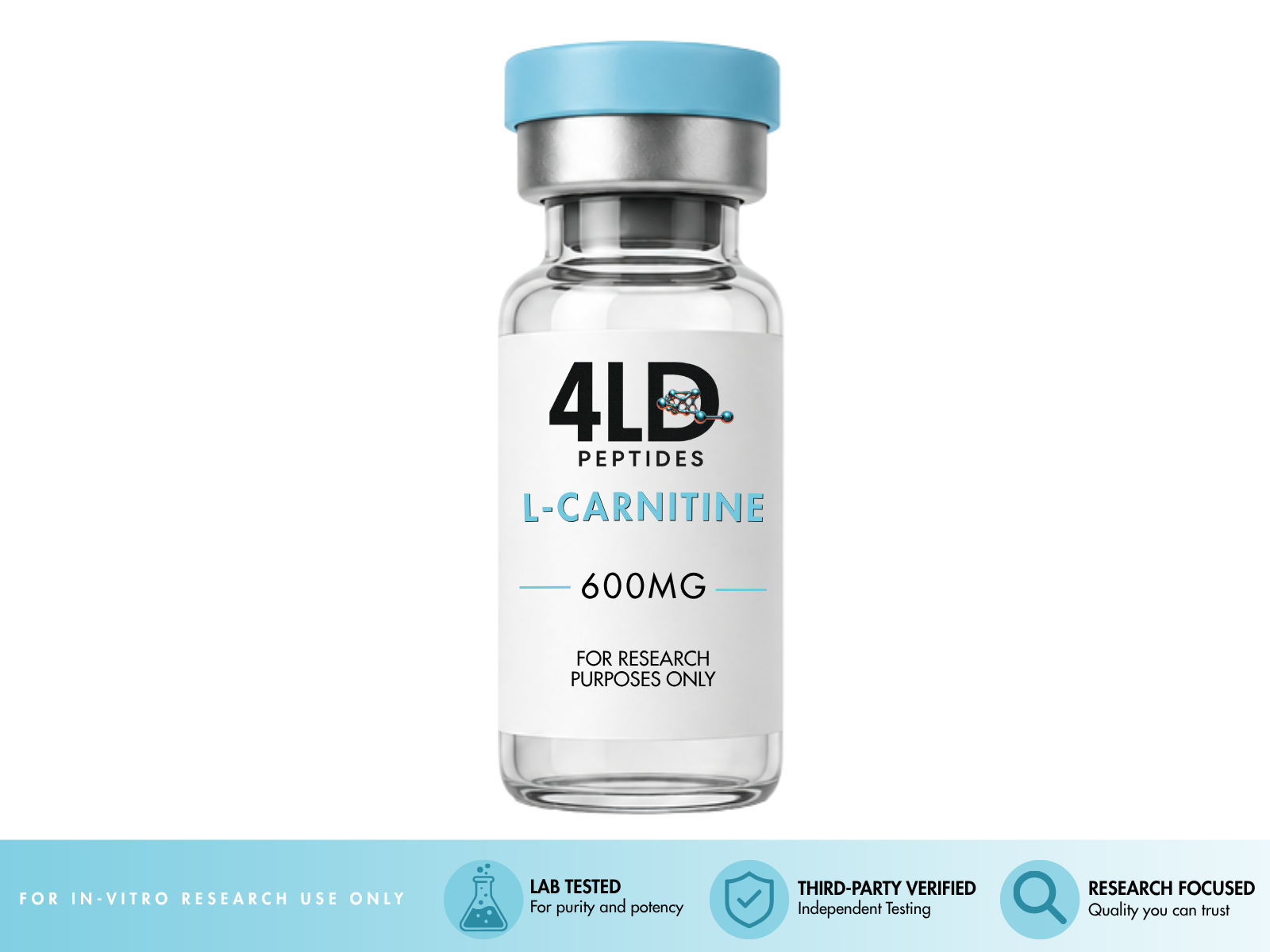
- Product: L-Carnitine
- Form: Research Compound
- Strength: Refer to selected product option
- Available Options: Single Vial or Research Kit
- Manufactured In: United States
- Quality Testing: Third-Party Tested
- Storage: Refrigerate upon receipt. For extended storage, freezing is recommended.
Storage & Handling
Store L-Carnitine under refrigerated conditions immediately upon receipt. For extended laboratory storage, freezing is recommended. Researchers should follow established laboratory handling procedures and minimize unnecessary environmental exposure to help preserve compound stability throughout the research process.
Frequently Asked Questions
What is L-Carnitine?
L-Carnitine is a naturally occurring amino acid derivative that plays an important role in transporting long-chain fatty acids into mitochondria for cellular energy production. It is widely investigated in laboratory research involving metabolism and mitochondrial biology.
What areas of research commonly involve L-Carnitine?
Researchers commonly investigate L-Carnitine in studies involving mitochondrial biology, cellular metabolism, fatty acid transport, bioenergetics, exercise physiology, and molecular biology.
Why is L-Carnitine important in laboratory research?
Because of its role in cellular energy metabolism, L-Carnitine serves as an important research tool for understanding mitochondrial function and metabolic regulation under controlled laboratory conditions.
Is this product intended for human use?
No. L-Carnitine is supplied exclusively for laboratory and scientific research. It is not intended for human consumption, veterinary use, therapeutic applications, or diagnostic procedures.
Related Products
Researchers interested in L-Carnitine may also explore:
Research Use Disclaimer
For Research Use Only.
Products sold by 4LD Research are intended exclusively for laboratory and scientific research by qualified professionals. They are not intended for human consumption, veterinary use, therapeutic procedures, or diagnostic applications. Researchers are responsible for complying with all applicable laws, regulations, and institutional guidelines governing the handling and use of research materials.