
Description
Research Overview
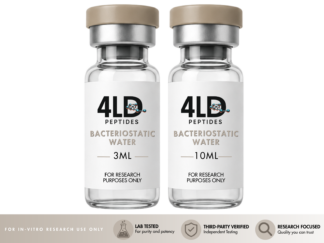
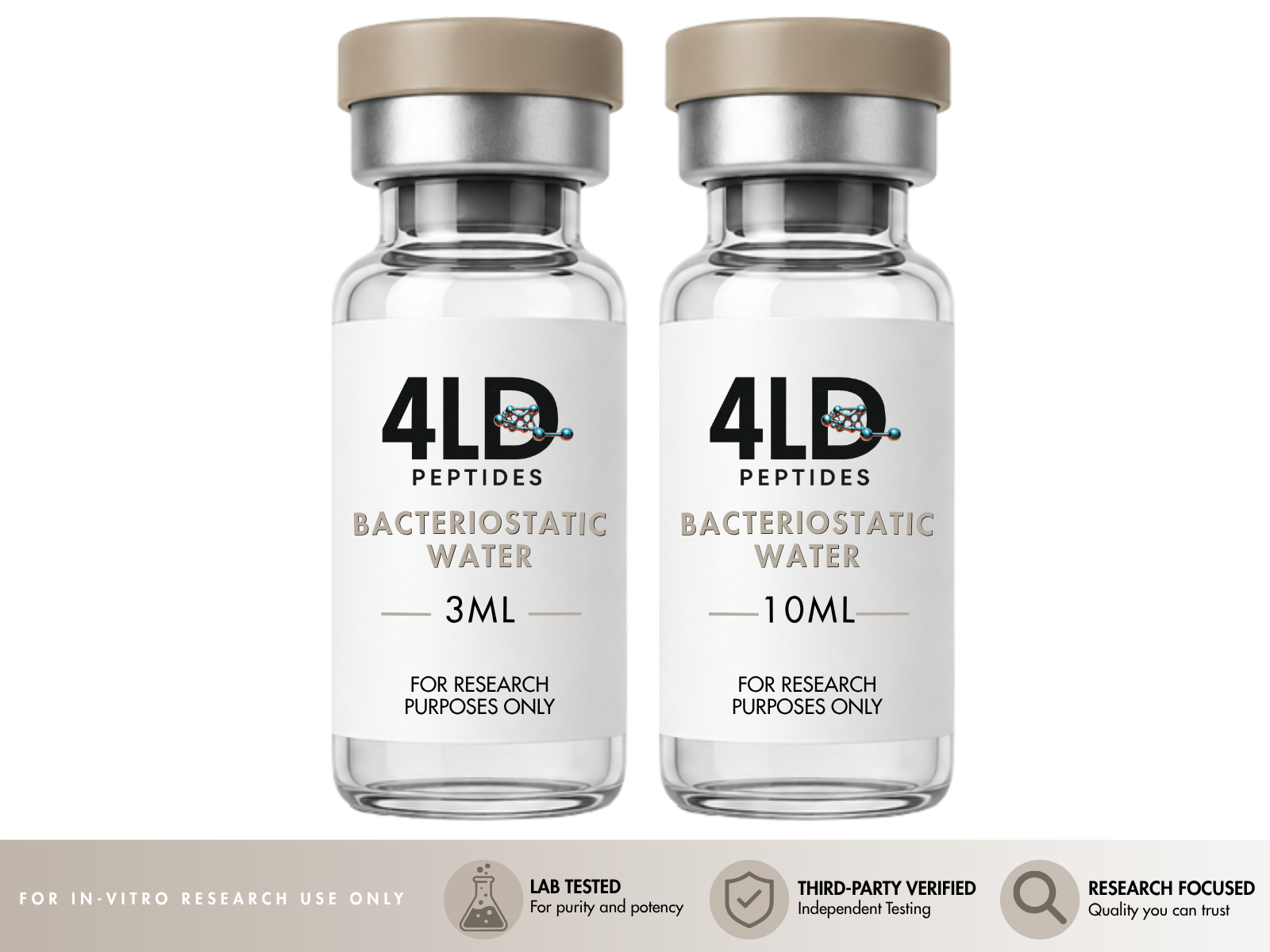
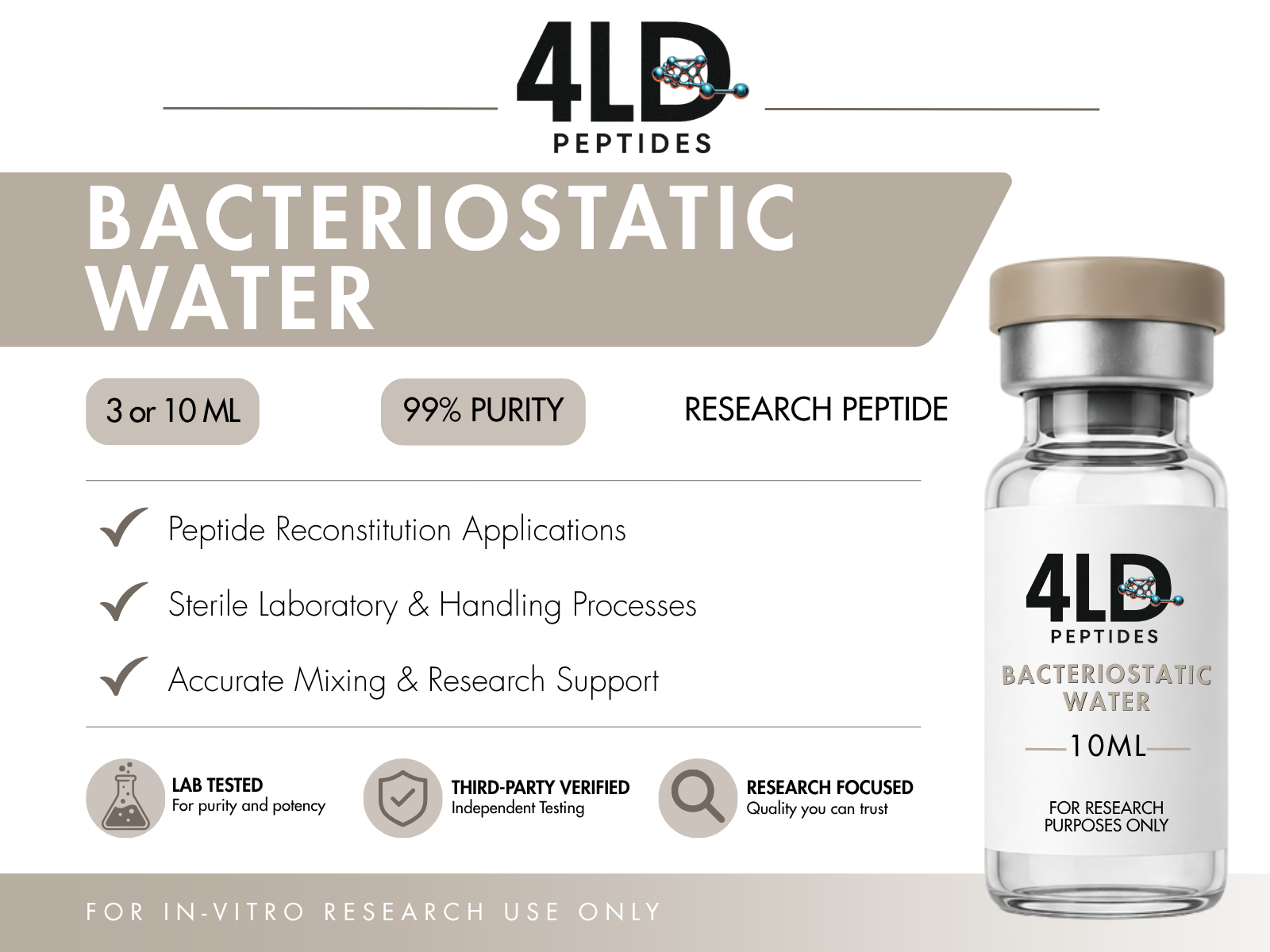
Bacteriostatic Water is a sterile, non-pyrogenic water preparation containing 0.9% benzyl alcohol as a bacteriostatic preservative. It is widely utilized in laboratory environments as a diluent for the reconstitution of lyophilized research peptides, proteins, and other investigational compounds.
Researchers rely on Bacteriostatic Water because it provides a convenient and standardized solution for preparing research materials prior to laboratory use. Its preservative helps inhibit bacterial growth during repeated withdrawals when handled according to established laboratory protocols, making it a commonly used supply within peptide and molecular biology laboratories.
Because many research compounds are supplied in lyophilized form, Bacteriostatic Water remains an essential component of laboratory workflows involving peptide preparation and experimental consistency.
Why Researchers Use Bacteriostatic Water
Researchers utilize Bacteriostatic Water because it provides a sterile diluent for preparing lyophilized research materials prior to experimental use. Standardized reconstitution procedures help improve consistency across laboratory experiments and reduce variability during compound preparation.
Its widespread use in peptide research laboratories makes Bacteriostatic Water an essential supporting product for investigators working with lyophilized research compounds.
Laboratory Applications
Bacteriostatic Water is commonly utilized for:
- Reconstitution of lyophilized research peptides
- Preparation of laboratory research compounds
- Standardized laboratory workflows
- Molecular biology research
- Peptide laboratory protocols
- Controlled experimental preparation
- Research supply inventory
- Scientific laboratory applications
These applications are intended exclusively for laboratory and scientific research.
Product Specifications
- Product: Bacteriostatic Water
- Form: Sterile Diluent
- Preservative: 0.9% Benzyl Alcohol
- Sterility: Sterile and Non-Pyrogenic
- Available Sizes: Refer to product options
- Manufactured To: Pharmaceutical quality standards
- Storage: Store according to product labeling and laboratory best practices.
Storage & Handling
Store Bacteriostatic Water according to the product label in a clean laboratory environment. Researchers should follow established aseptic handling procedures during reconstitution and preparation of research compounds. Always inspect the solution before laboratory use and discard if contamination or particulate matter is observed.
Frequently Asked Questions
What is Bacteriostatic Water?
Bacteriostatic Water is sterile, non-pyrogenic water containing 0.9% benzyl alcohol. It is commonly utilized as a laboratory diluent for reconstituting lyophilized research compounds.
What is Bacteriostatic Water used for?
Researchers commonly use Bacteriostatic Water for preparing lyophilized peptides and other research compounds prior to laboratory investigations.
Why does Bacteriostatic Water contain benzyl alcohol?
The benzyl alcohol acts as a bacteriostatic preservative to help inhibit bacterial growth during repeated withdrawals when handled according to laboratory protocols.
Is every batch quality tested?
Yes. Every batch undergoes quality testing to help ensure sterility and consistency for laboratory research applications.
Is this product intended for human use?
No. Bacteriostatic Water supplied by 4LD Research is intended exclusively for laboratory and scientific research. It is not intended for human consumption, therapeutic applications, veterinary use, or diagnostic procedures.
Related Products
Researchers using Bacteriostatic Water may also explore:
Research Use Disclaimer
For Research Use Only.
Products sold by 4LD Research are intended exclusively for laboratory and scientific research by qualified professionals. They are not intended for human consumption, veterinary use, therapeutic procedures, or diagnostic applications. Researchers are responsible for complying with all applicable laws, regulations, and institutional guidelines governing the handling and use of research materials.